Find anyone's social media, news, and videos — from one photo.
Upload a photo and facesearching instantly scans social media profiles, news articles, blogs, and videos for matches. Spot fake identities, expose scammers, and verify who you're really talking to — with your image deleted the moment the search is done.
Find social media, news & videos
Upload a photo and we'll scan social media profiles, news articles, blogs, and videos for matches. Spot scammers, catfish, and fake identities in seconds.
Sign in to start searching
Each search costs 3 credits. Sign in or create an account to purchase credits and run a face search.
Watch the search come to life.
From upload to results — see exactly what happens when you search a face.
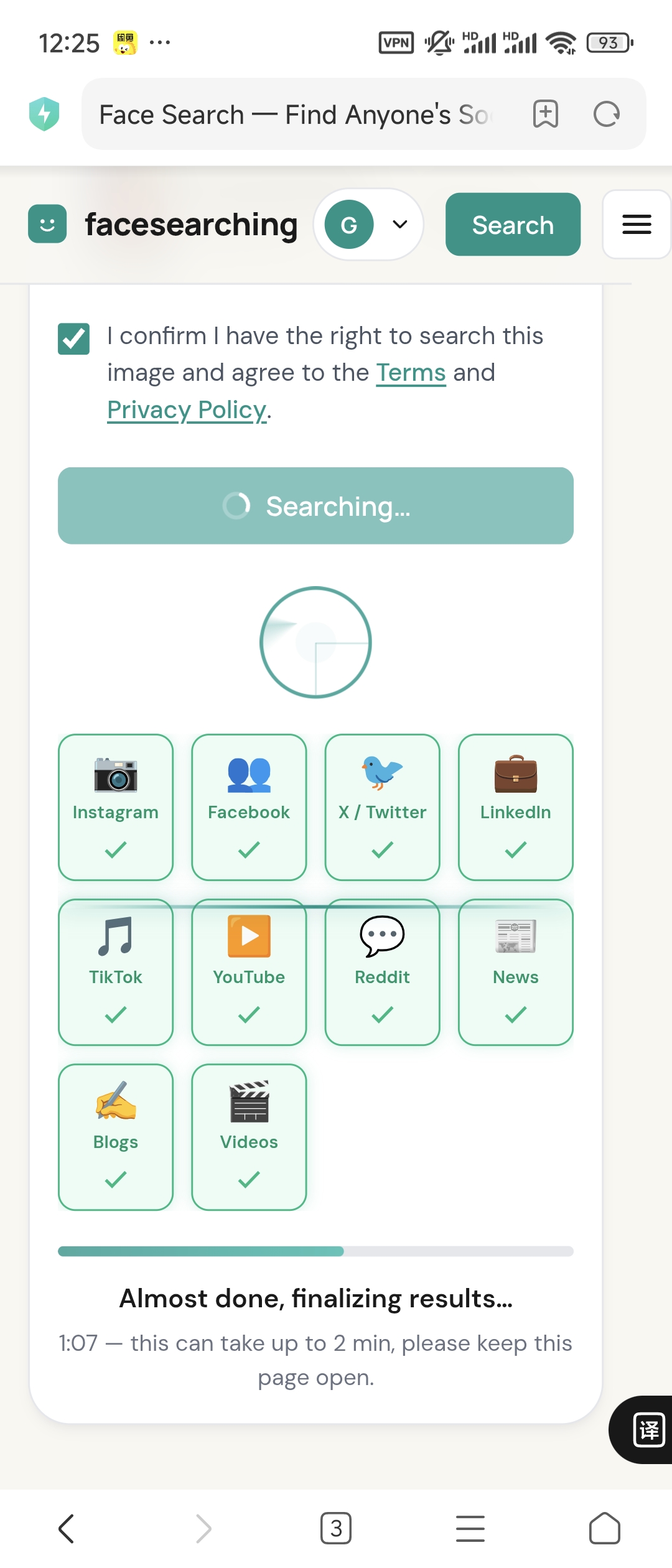
Real-time platform scanning
Watch as facesearching scans Instagram, Facebook, TikTok, LinkedIn, and more — with live progress and confidence scores.
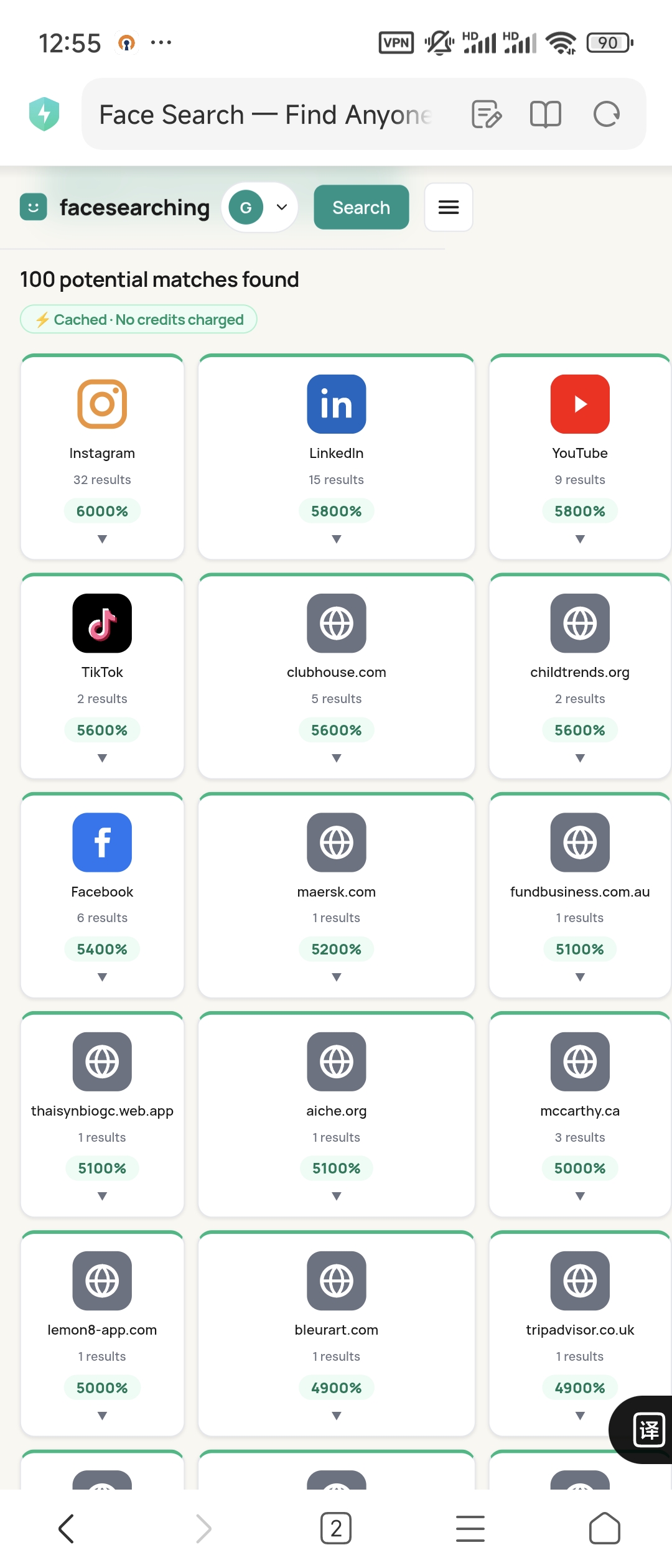
Organized, actionable results
Results grouped by platform with match counts and confidence percentages — click any platform to see all matched links.
Three steps. That's it.
No accounts required to start, no data retention, no fine print. Just upload, scan, and review.
Upload a photo
Upload any clear, front-facing photo. The clearer the face, the better the matches.
We scan the whole web
Our engine searches social media, news sites, blogs, and videos for matches to your photo.
Spot scammers & verify identity
Each result includes a confidence score and source link. See if the face belongs to a scammer, catfish, or real person.
One photo, the whole public web.
Our search engine scans publicly available pages across the internet — social media, news, blogs, videos, and more — to find where a face appears online.
Social Media Profiles
Find matching profiles across major social platforms.
News & Articles
Discover news coverage, press mentions, and media appearances.
Blogs & Forums
Surface personal blog posts, forum threads, and community discussions.
Video Platforms
Identify faces appearing in publicly available video content.
Public Records
Access public directories, official documents, and open databases.
Scam & Fraud Reports
Check if the face appears in scam alerts or fraud report databases.
Privacy isn't a setting. It's the product.
We designed facesearching so that privacy is the default, not an opt-in.
Photos deleted after search
Your uploaded image is used to run the search and is then removed from our servers. We never keep a copy.
Consent required, every time
Every search requires an explicit consent checkbox. Nothing runs in the background and nothing runs without you saying yes.
Public sources only
We only scan publicly available web pages. We don't access private accounts, paywalls, or anything behind a login.
No training on your face
We never use your photos to train models, and we never sell or share your images with third parties.
Trusted by thousands.
Real stories from people who used facesearching to stay safe online.
"I was talking to someone on a dating app for weeks. One photo search revealed their face was all over scam warning sites. Saved me from a potential catfish."
"A client sent me a suspicious profile photo for a background check. facesearching found 3 social media accounts the person never disclosed. Invaluable tool."
"Someone was using my photos on a fake Instagram account. I searched my own face and found the impersonator profile within seconds. Problem solved."
Why people search faces.
From dating safety to identity protection — see what facesearching can do for you.
Catch catfish & romance scammers
Met someone online? Search their photo to see if it appears on scam warning sites or belongs to someone else entirely.
Verify online identities
Check if a person's photo matches their claimed social media presence or appears on accounts they haven't told you about.
Background checks
Professionals use facesearching to cross-reference faces against public records, news articles, and public databases.
Protect your own image
Search your own face to find unauthorized use of your photos on social media, blogs, or scam profiles impersonating you.
Pay for what you search.
Single search or monthly plan. Find scammers, verify identities, protect yourself.
Single search
One search, one photo. No commitment.
- 1 face search
- Public web scan
- Photo deleted after search
- No account required
Starter plan
For regular checks and personal use.
- 10 face searches / month
- Confidence scores
- Saved search history
- Priority queue
Pro plan
Higher volume for professionals.
- 30 face searches / month
- Export social media, news, blog & video results
- Email alerts on new matches
- Priority support
Questions, answered
facesearching only indexes publicly available web pages. You must have the right to search a given image — for example, your own face, or an image you own or have permission to use. We do not support stalking, harassment, or searching minors.
Your uploaded photo is used only to run the search and is deleted immediately afterward. We do not store, train models on, or redistribute your images. Consent is required before every search.
Yes. If someone is using a fake identity or stolen photos, a face search can reveal where that face actually appears online — social media, news, scam reports, or video sites. This helps you verify if the person you're talking to is who they claim to be.
We scan publicly available social media profiles, news articles, blogs, and video sites. We do not access private accounts, paywalled content, or anything behind a login. Each result includes a confidence score and a direct link to the source.
Each result includes a confidence score so you can judge the likelihood of a match. Results are drawn from public pages and should be treated as leads to review, not as definitive identification.
You can run a single search without an account, but signing in lets you manage credits, review past searches, and access higher-volume packs. Credits never expire as long as your account is active.